
Can a locksmith get you back into your car without damaging the door, lock or electronics? That’s the question when your keys are locked inside. Forcing a window or trying an improvised tool can make a stressful situation worse. Non destructive car entry aims to restore access without harming the vehicle, but the right approach depends on the car and the circumstances.
The make and model, locking system and condition of the vehicle can all affect the method. A mobile auto locksmith assesses the situation before choosing a suitable approach and specialist tools. The aim is careful access, not a single technique used on every car.
This guide explains what non-destructive entry means, what to expect during a vehicle lockout call-out and what can affect the options. It also covers why prising open a door can damage seals, paintwork, wiring or other components. KeysKev provides 24/7 mobile vehicle lockout assistance across the UK, using non-destructive entry techniques.
Key Takeaways
- Non destructive car entry is a careful, vehicle-specific approach intended to avoid damage, not a one-size-fits-all technique.
- Your car’s make, model, lock design and security system can shape how a locksmith works to restore access.
- “Non-destructive” describes the aim, not a guarantee. The vehicle’s condition and any existing faults can affect the options.
- During a professional call-out, expect clear communication, an assessment of the vehicle, careful work and an access check.
- KeysKev provides 24/7 mobile vehicle lockout assistance across the UK, using non-destructive entry techniques.
What does non-destructive car entry mean?
A lockout is stressful enough without worrying about a damaged door, broken glass or an expensive repair. Non destructive car entry means attempting to access a locked vehicle without damaging it. The locksmith assesses the car and chooses an approach intended to protect its doors, locks, glass and surrounding components.
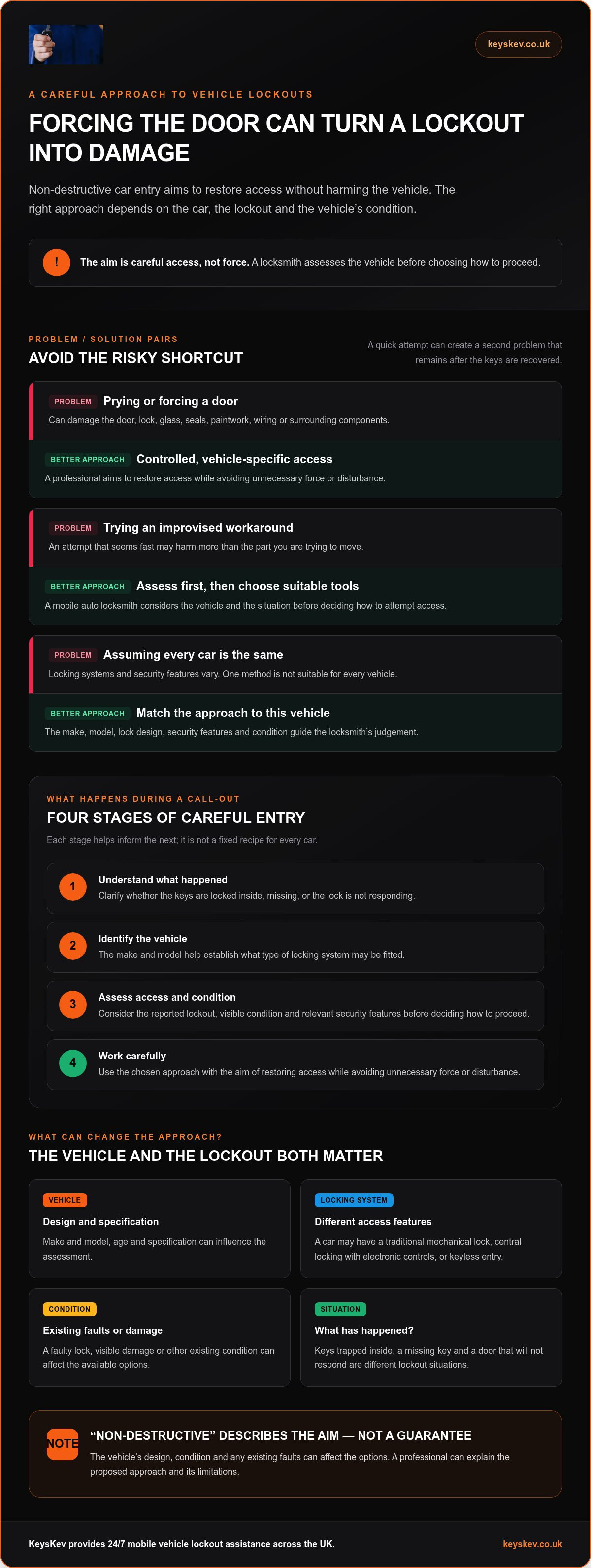
That differs from breaking a window, levering a door or trying an improvised workaround. These actions can harm more than the part you’re trying to move. A damaged seal, scratched paint or disturbed wiring can cause further problems after you’re back inside. Professional entry instead aims to avoid unnecessary force and account for the vehicle’s design.
What makes vehicle entry non-destructive?
The aim is to regain access while protecting the door, lock, glass and surrounding trim. A professional approach is controlled and vehicle-specific, rather than prising components until something gives. The locksmith considers how the vehicle is built and secured, then works to limit the risk of physical or electronic damage.
Lock picking is one broad way of manipulating a lock without breaking it. For background, lock picking techniques describes the general principles. A car’s locking system can differ from a standard door lock, so an automotive locksmith needs to account for the vehicle’s own design and security features. The key distinction is the aim: professional access seeks to leave the vehicle intact rather than relying on force.
Why do drivers request non-destructive car entry?
Getting inside quickly shouldn’t create another problem. If keys are visible on a seat or trapped in the boot, it can be tempting to try whatever seems fastest. But damage to glass, paintwork, seals or a lock may mean further repairs and leave the vehicle less secure. A careful entry method aims to protect the car while addressing the immediate lockout.
There’s also the practical concern of being stranded. You may need to continue a journey, collect someone or get out of poor weather. Preserving the vehicle matters even when time feels tight. Forcing a door can turn a temporary access problem into damage that remains after the keys are recovered.
Non-destructive describes the intended method, not a promise that every situation will have the same outcome. Existing damage, a faulty lock or the vehicle’s design can affect the options. A professional can explain the proposed approach and its limitations instead of treating every car as if it had the same locking system. That assessment is what separates careful vehicle entry from a risky attempt to force your way in.
How does a locksmith approach non-destructive car entry?
A professional doesn’t start by forcing a door. The locksmith first clarifies what has happened, identifies the vehicle and considers how to attempt access carefully. The right judgement for one car may not suit another. A locksmith assesses the vehicle before choosing an approach, taking its design, condition and security features into account.
The process is straightforward, but each stage informs the next:
- Understand the situation. The locksmith asks what happened, such as whether the keys are locked inside, missing or the lock isn’t responding.
- Identify the vehicle. The make and model help establish what type of locking system may be fitted.
- Assess access. The locksmith considers the reported lockout, visible condition and relevant security features before deciding how to proceed.
- Work carefully. The chosen approach is applied with the aim of restoring access while avoiding unnecessary force or disturbance.
This isn’t a fixed recipe. If the vehicle’s condition or the lockout details differ from what was first reported, the locksmith may need to reassess rather than continue with an unsuitable approach.
What does the locksmith assess before attempting entry?
The locksmith matches the reported problem to the vehicle in front of them. They consider the vehicle’s identity, what you say has happened and any visible damage or signs that the lock may already be faulty. Security features also matter. A key trapped inside, for example, presents a different situation from a missing key or a door that won’t respond.
These details guide professional judgement. They don’t point to one universal method, so the locksmith should assess the specific lockout rather than assume every car can be approached in the same way.
Why can the approach vary between vehicles?
Vehicle access systems aren’t all built the same way. Some cars use a more traditional mechanical lock; others combine central locking with electronic controls. Keyless entry adds another type of system to consider. These differences can affect how a locksmith evaluates access, and mean that no single approach is suitable for every vehicle.
Age and specification can also influence the assessment. Two cars from the same manufacturer may have different locking features depending on their model and equipment. That’s why non destructive car entry calls for a vehicle-specific decision, not an assumption based on appearance alone. The vehicle’s design and condition should guide the work.
If you’re locked out, KeysKev provides mobile vehicle lockout assistance across the UK. Get help with a vehicle lockout rather than attempting to force the door yourself.
Does non-destructive entry always prevent damage?
No. “Non-destructive” describes the intended approach, not a universal guarantee that damage is impossible in every lockout. A professional aims to regain access while minimising disturbance, but the options depend on the vehicle and its condition. A faulty lock, existing damage or a security feature can make the situation more complex.
That distinction matters. A careful professional assessment is not the same as trying to force a door because access feels urgent. Non destructive car entry aims to avoid damage, but it cannot promise that every vehicle can be opened in the same way or without complications. If a particular approach is unsuitable, the locksmith needs to take that into account rather than press ahead regardless.
What can make a lockout more complicated?
A damaged lock or fault in the locking system can change which access options are appropriate. Unusual vehicle security or a model-specific design may also call for extra care. These factors don’t automatically mean the vehicle will be damaged or access will fail. They do mean the situation needs to be judged on its own details.
The type of lockout matters too. If a key is locked inside, it may be available once access is restored. If the key is missing, entry may address the immediate access problem, but the underlying issue is different. When arranging help, explain what happened and mention any known lock fault or previous damage.
Why should drivers avoid forcing a car door?
Levering a door or breaking glass can damage paintwork, seals, trim, glass or locking components. Force can also create a new problem without getting the door open. A bent frame or damaged seal, for instance, may affect how the door closes afterwards. Avoid experimenting with improvised methods. Stop and seek professional vehicle lockout help instead.
The difference is the level of assessment and control, not a guarantee of a particular outcome:
| Professional assessment | Improvised force |
|---|---|
| Considers the reported lockout, vehicle condition and security features. | May overlook existing faults or vehicle-specific details. |
| Aims to restore access while limiting unnecessary disturbance. | Can damage paintwork, seals, trim, glass or locking components. |
| Allows the approach to reflect the circumstances. | Doesn’t guarantee access and can create further problems. |
If you’re stranded, a measured assessment is a safer starting point than force. Tell the locksmith whether the key is locked inside or missing, and mention any known damage or faults. These details help set realistic expectations and support a careful decision about the next step.
What should you expect during a professional car entry call-out?
A lockout can leave you unsure what to do next. A professional call-out should make the next steps clear: explain what has happened, share where the vehicle is and let the locksmith assess access. You should know what to expect as the work progresses, without needing to interfere or try to open the car yourself.
Before help arrives, give a clear description of the vehicle’s location and say whether you’re in a safe place. On arrival, the locksmith will confirm the vehicle and lockout details with you, then carry out the work carefully. Once access is restored, check that you can get into the vehicle and that it is secure.
What information helps the locksmith prepare?
Clear details help the locksmith understand the call-out. Share the vehicle’s make and model, what happened, and any visible issue with the lock or door. Explain whether the keys are locked inside, missing, or whether the locking system hasn’t responded as expected.
Use this short checklist when describing the situation:
- Vehicle: make and model.
- Location: a clear description of where the car is parked.
- Lockout: what happened and where the keys are, if you know.
- Visible issue: any damage or lock problem you’ve noticed.
Share these details directly with the locksmith, not in a public post. You don’t need to publish personal information or unnecessary identifying details online.
What happens after access is restored?
Once you can get into the vehicle, check that access works as expected and that the car is secure before continuing your journey. If you reported a separate issue, such as a lock that was sticking or failing to respond, mention it again. Regaining access may resolve the immediate lockout without fixing an underlying fault.
Stay nearby but out of the locksmith’s way during the work. Choose a safe place to wait, especially if the vehicle is parked close to moving traffic. Don’t pull at the door, try another entry method or handle equipment while the locksmith is working. A calm handover helps keep the process straightforward.
KeysKev provides 24/7 mobile vehicle lockout assistance across the UK, using non-destructive entry techniques. If you’re locked out, arrange mobile vehicle lockout help and share the details of your situation directly.
How KeysKev helps with non-destructive car entry
Being locked out can disrupt your plans and leave you unsure whether an attempt to open the car might cause damage. KeysKev Auto Locksmith provides 24/7 mobile auto locksmith services across the UK, including vehicle lockout assistance using non-destructive entry techniques. The aim is practical: restore access while treating the vehicle with care.
Non destructive car entry isn’t a single method that works identically on every car. The vehicle’s design, condition and the circumstances of the lockout can affect the approach. KeysKev uses non-destructive entry techniques, while recognising that the process and outcome can vary from vehicle to vehicle.
Vehicle lockout help when access matters
If your keys are locked inside or you can’t access your vehicle, mobile vehicle lockout assistance brings help to the car. Explain what’s happened and give a clear description of its location. These details help establish the situation and make the next steps easier to discuss.
KeysKev focuses on vehicle access. Rather than forcing a door or using an improvised workaround, you can request professional help that aims to avoid unnecessary damage. If the car has a known lock fault or visible damage, mention it when describing the lockout. This helps the locksmith understand the circumstances before work begins.
The details still matter. A key locked inside and a vehicle that won’t respond to its locking system are different problems, and the approach may vary with the vehicle and its condition. Non-destructive methods are the aim, but every lockout is different and no outcome should be assumed in advance.
Get help from KeysKev
When you request assistance, be ready to share the vehicle’s make and model, where it is and what happened. Include any visible damage or issue with the lock. Keep your description clear and factual. If you’re waiting near traffic or in an uncomfortable spot, move somewhere safer and avoid interfering with the vehicle while help is being provided.
KeysKev provides mobile vehicle lockout assistance across the UK and uses non-destructive entry techniques. The aim is to restore access carefully, not to force the vehicle open. Once you’re back in, check that the vehicle is secure. If you’ve noticed a separate fault with the lock, make a note of it so it can be addressed separately.
If you’re locked out, request mobile vehicle lockout assistance from KeysKev.
Make your next step a safe one
A lockout can make you feel rushed, but forcing the door or trying an improvised fix may leave you with a bigger problem. Pause, move somewhere safe if needed, and share clear details about the vehicle and what’s happened. That gives a professional a better starting point for choosing a careful approach.
Choosing non destructive car entry means prioritising the vehicle’s condition as well as getting back inside. The exact approach depends on the car and circumstances, so clear communication matters from the outset. You don’t need to solve the lockout yourself.
For help with a vehicle lockout, request assistance from KeysKev. Explain the situation and let a professional guide the next step.
Frequently Asked Questions
Can a locksmith open a car when the keys are locked in the boot?
Often, a locksmith can help, but the options depend on the vehicle and how its boot and central locking are designed. Tell them whether the boot shut with the keys inside and whether any doors remain unlocked. If the boot is part of a locked vehicle, access may need a different approach from a boot-only fault. Don’t force the boot lid, as this could damage its trim or locking parts.
Can non-destructive car entry work if the car battery is flat?
It may be possible, but a flat battery can affect electronic locks and access systems. Tell the locksmith that the battery is flat, or mention signs such as unresponsive lights or remote locking. The vehicle’s design will influence the options. Avoid repeatedly pressing the remote or trying to prise a door open. A professional can assess the situation and explain what access may be possible.
Will unlocking my car set off its alarm?
It might. Alarm behaviour varies by vehicle and by how it’s locked or unlocked, so be prepared for a warning sound. If you have a working key or remote, keep it with you, as it may help you silence the alarm once you’re inside. Let the locksmith know if the alarm has already sounded or if the vehicle has an unusual security system.
Do I need to prove that the car is mine before a locksmith opens it?
Be ready to show that you’re entitled to access the vehicle. A locksmith may ask for identification or other reasonable evidence, particularly if the circumstances are unclear. If your documents are locked inside, explain that when arranging help and say what you can provide once access is restored. Don’t post registration documents, addresses or personal details publicly. Share relevant information directly with the locksmith.
What should I do if a child or pet is locked inside the car?
If a child or pet is in immediate danger, call 999 straight away and follow the emergency operator’s instructions. Don’t wait for a routine vehicle lockout appointment. Explain the situation clearly, including the vehicle’s location and the condition of the person or animal inside. If they appear distressed or conditions are worsening, treat it as urgent. Keep yourself safe while help is on its way.
Can a locksmith unlock a car if the central locking has failed?
Yes, a locksmith may still be able to help, but a central locking fault can affect which access options are suitable. Tell them whether the fault affects every door, just one door or the remote as well. If a key turns but the locks don’t respond, mention that too. Once you’re back in, note any continuing fault, as restoring access may not fix the underlying locking problem.


