
Locked out with your keys inside, or unable to get into your car? A vehicle lockout service provides mobile help to regain access, but the right approach depends on your car’s make, model, locking system and condition. It’s understandable to worry about damage to the door or lock. KeysKev uses non-destructive entry techniques and assesses each vehicle before proceeding.
You don’t need to know locksmith terminology to ask for help. Explain where the vehicle is, what has happened and whether the key is inside, lost or not working. KeysKev provides mobile vehicle lockout assistance, with a practical approach focused on getting you back into your car.
This guide explains what to expect when you call, what information to have ready and why the entry process can vary between vehicles. It also covers what to do while you wait, and when a lost or unusable key may need replacement-key help as well as access work.
Key Takeaways
- A vehicle lockout service provides mobile help to regain access, with the approach shaped by the vehicle and situation.
- Describe what has happened and share useful vehicle details when you call.
- Whether the key is inside, lost, locked in the boot or part of a keyless system can affect the assessment.
- Have your vehicle details and exact location ready to help the locksmith prepare.
- KeysKev provides 24/7 mobile lockout assistance using non-destructive entry techniques. The vehicle’s design and condition can affect what is possible.
What does a vehicle lockout service do when you are locked out?
A vehicle lockout service is mobile assistance to regain access to a locked car. The locksmith attends the vehicle, assesses the locking system and circumstances, then chooses an appropriate entry method. This is useful when your key is inside the car, the boot has locked with the key inside or the vehicle will not unlock with its remote.
Vehicle entry is different from breakdown recovery. A locksmith works on access to the locked car, while recovery moves a vehicle that cannot continue its journey. A lockout call also does not automatically mean you need a replacement key. KeysKev uses non-destructive entry techniques, though the vehicle and circumstances affect what is possible. For a general overview of locksmithing, including modern practice, see Wikipedia.
When is a vehicle lockout service the right help?
A lockout service is suited to an access problem. The key might be visible on the seat, locked in the boot, or unavailable because the remote is not unlocking the car. The key question is whether you need access to a locked vehicle, rather than help with starting or driving it.
- Locked out: The vehicle is locked, and the key is inside or the locking system is not letting you in.
- Flat battery or breakdown: The car may need battery or mechanical assistance rather than entry work.
- Lost or unusable key: Access may be only part of the problem. A replacement key or other key service may also be needed.
Describe which situation applies and mention any other problem, such as vehicle damage or a car that will not run. That helps clarify whether you need access, key work or a different type of assistance.
What does mobile assistance mean?
Mobile assistance means the locksmith comes to the vehicle, rather than requiring you to take it to a garage first. Share the precise location and any access restrictions, such as a locked car park, height limit or position that is difficult to reach.
The vehicle’s make, model, locking system, condition and surroundings all affect the practical options. The locksmith assesses these details before proceeding. Non-destructive entry is KeysKev’s approach, but the method and outcome depend on the circumstances of the individual vehicle.
The call begins with the details of your vehicle and what has happened. The next step is an assessment of the locked car. A lost key, flat battery or breakdown may call for different help from an access problem.
What happens during a vehicle lockout callout?
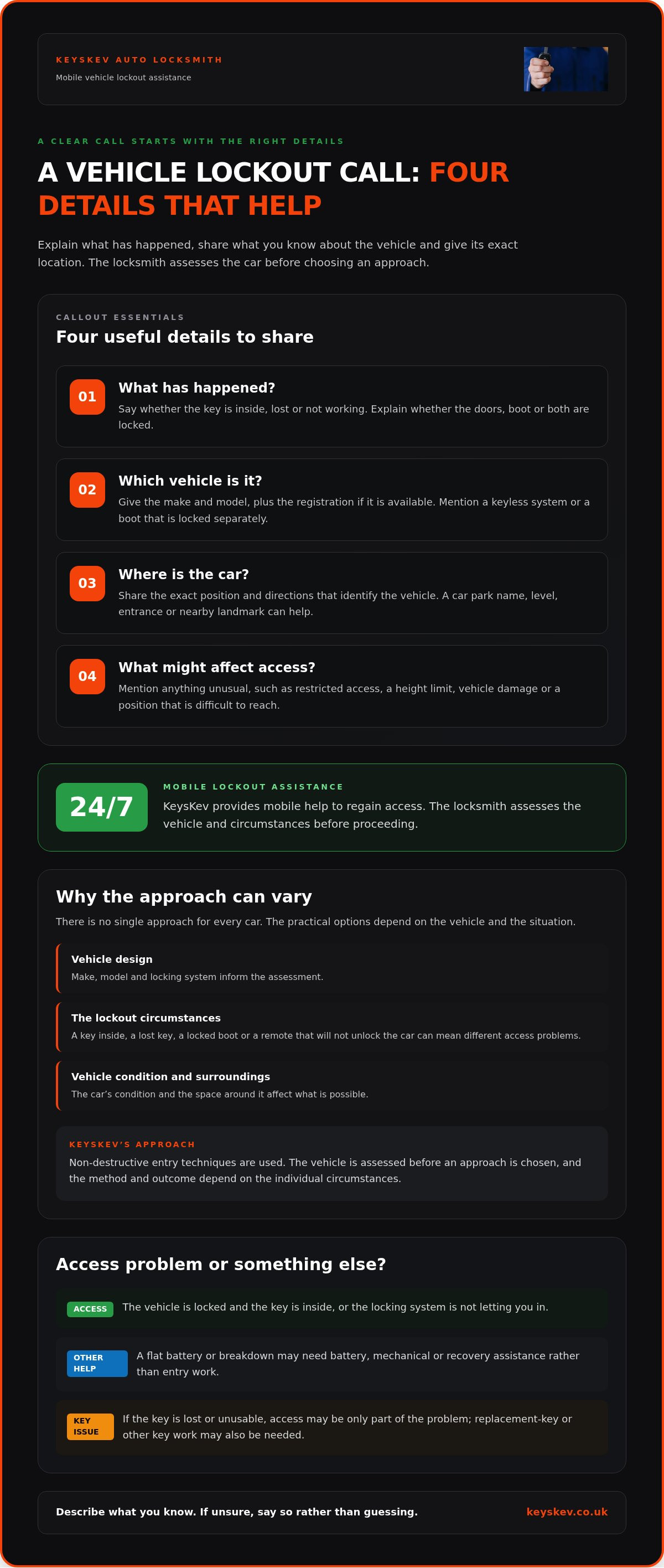
A clear call helps the locksmith understand the problem and prepare for the vehicle-specific assessment. Explain what has happened in plain language, share the details you know and mention anything unusual, such as a key locked in the boot or a keyless system that has stopped responding.
In short: describe the lockout, provide the vehicle details and exact location, then let the locksmith assess the vehicle before choosing an approach.
- Describe the issue: Say whether the key is inside, lost or not working, and whether the doors, boot or both are locked.
- Share vehicle details: Give the make, model and registration if available.
- Give the location: Provide the exact position and directions that will help identify the vehicle.
- Assess access: The locksmith considers the car and circumstances before deciding how to proceed.
These details make the initial conversation useful, but the vehicle still needs to be assessed. If you are unsure whether the key is faulty or the locking system has failed, describe what you can see rather than trying to diagnose it.
What information should you give on the call?
Start with the vehicle’s make and model, then give its registration if you have it to hand. Explain whether the car is fully locked and where you believe the key is. Mention if the boot is locked separately or if the vehicle uses keyless entry. This helps distinguish an access problem from a lost or faulty key issue.
Be precise about the location. A car park name, level, entrance or nearby landmark can help the locksmith find the right vehicle. If you are unsure about a detail, say so rather than guessing. For example: “The key is in the boot, the doors are locked, and the car is on level two.”
How does the locksmith approach entry?
Vehicle details give the locksmith useful context, but they do not replace an on-site assessment. The make, model, locking system and circumstances inform the practical approach. KeysKev uses non-destructive entry techniques for vehicle lockouts. The vehicle’s condition and design can affect what is possible.
The locksmith assesses the vehicle before proceeding rather than assuming one method suits every car. If anything changes while you are waiting, such as your exact position or the key becoming visible, pass that information on so the assessment reflects the current situation.
If your key is missing or unusable, mention it during the call. Entry and replacement-key work address different needs, and being clear about both helps identify the next step. For a locked-out vehicle, KeysKev’s mobile vehicle lockout assistance is the place to start.
Why can vehicle lockout jobs need different approaches?
A car locked with the key inside presents a different access problem from one with a missing key or a boot that will not open. The locksmith has to consider what has happened as well as the vehicle’s design. The make and model, locking system and space around the car can all affect which approach is practical.
- Key inside: The immediate task is to regain access and retrieve the key.
- Key lost: There is no key to retrieve, so replacement or programming work may be needed as well as access.
- Boot locked: The key may be in the boot, or the boot may be the only part that will not open. Explain which parts of the vehicle are locked.
- Keyless vehicle: The fob may be inside, missing or not communicating as expected. The vehicle’s system affects the assessment.
This is a comparison of different situations, not a ranking of vehicle brands. Similar symptoms can have different causes, and no single entry method applies to every locking system. The locksmith considers the specific car and circumstances before proceeding.
How do vehicle locking systems affect a lockout?
Central locking allows doors to lock or unlock together, often using a key or remote. A transponder is an electronic component in some keys that communicates with the vehicle’s immobiliser. Keyless entry uses a fob that the vehicle detects without the driver inserting it into a lock. Because these systems have different functions, the vehicle’s setup can shape the access assessment.
Not every lockout requires key programming. Entry work is about access, while programming concerns the electronic relationship between a key and the vehicle. For general information about the UK auto locksmith trade, the Auto Locksmiths Association (ALA) is a relevant industry resource. Programming is a separate job from getting into a locked car.
Is a locked-in key different from a lost key?
Yes. If the key is locked inside, the immediate problem is access. If it is lost, there may be no existing key to use once the vehicle is open. Replacement or programming work may then be a separate next step, depending on the vehicle and key. Explaining which situation applies helps distinguish an entry request from a key-replacement need.
The vehicle’s position matters too. A car parked close to a wall, in a tight space or behind a barrier may be harder to approach than one with clear working room. Share any access restrictions when describing the situation. These details help the locksmith assess the job without assuming the same method will suit every car.
How can you prepare while waiting for vehicle lockout help?
A few details can make a vehicle lockout service callout easier to organise. Keep your vehicle information and exact location ready, then wait somewhere safe and accessible. You do not need to try to solve the lockout yourself. Forcing a door or window can damage the vehicle and make the problem harder to resolve.
Which details help the locksmith prepare?
Have the make, model and registration number ready if you know them. Explain where the key is, if you can see or remember, and whether the doors, boot or both are locked. These details help describe the situation clearly, even if you do not know why the vehicle will not open.
- Give a precise location: Say whether the car is on a driveway, in a car park or beside the road. Include a car park level, entrance or nearby landmark if useful.
- Explain access restrictions: Mention barriers, gates, height limits or limited space around the vehicle.
- Flag safety concerns: Tell the locksmith if you are in an exposed spot or if a child, vulnerable person or animal is inside.
Clear directions matter. If the vehicle is behind a building or on a particular level, a short, specific description is more useful than a general location. Wait somewhere safe where you can guide the locksmith to the car, but do not stand in a live traffic lane or block access for other vehicles.
What should you avoid doing?
Do not force the door, window or lock, or try to prise a gap open with an improvised tool. This can damage the vehicle and make access harder. Avoid repeatedly pulling handles or pressing buttons if you are unsure what the locking system is doing. Leave the assessment to the locksmith.
Keep children, vulnerable people and animals under observation. Do not leave them unattended in the vehicle while you wait. If anyone inside is in immediate danger, call 999 rather than waiting for a locksmith. Move yourself and anyone with you to a safe place, and follow the emergency operator’s instructions.
If you are roadside, wait away from moving traffic. Keep your phone available in case the locksmith needs to clarify directions, and share any changes to your location or circumstances. These steps help keep the wait organised while prioritising safety.
Once you have the vehicle details, location and any safety concerns to hand, KeysKev can provide practical mobile help. Contact KeysKev for vehicle lockout assistance and explain what has happened.
How KeysKev's 24/7 vehicle lockout service helps you regain access
Locked out and unsure what to do next? KeysKev Auto Locksmith provides mobile vehicle lockout assistance 24/7. The locksmith assesses the locked vehicle and works to restore access at its location, using an approach suited to the car and the circumstances.
KeysKev uses non-destructive entry techniques for lockouts. The vehicle’s design, condition and circumstances affect what is possible, so the approach is assessed for each car. A clear description of what has happened helps the locksmith understand the situation before entry work begins.
For example, explain if your keys are inside, the boot is locked or the vehicle will not respond to its keyless system. If the key is lost or unusable, mention that too. This separates the immediate access problem from any additional work the key may need.
What can KeysKev help with beyond vehicle entry?
Getting into the car and getting a working key are separate jobs. If the key is lost or no longer usable, KeysKev also cuts and programmes replacement and spare keys, including remote fobs and transponders. These services address the key itself, rather than unlocking the vehicle. Describing both needs helps clarify what you need help with.
You do not need to diagnose a fault before calling. Say what you can observe: whether the key is missing, damaged, inside the car or failing to unlock it. If you have a spare, explain whether it works. These details help keep the request focused on access first and any separate key issue next.
How do you request help?
Call and describe the lockout in plain language. Share the vehicle’s make, model and registration if available, then give the exact location. Include useful details such as the car park level, entrance or nearby landmark, and mention any access restrictions. If there is a safety concern, say so at the start.
You do not need to know the name of the locking system or suggest an entry method. The vehicle details and your description help KeysKev understand the situation, then assess the car before proceeding.
If you are locked out now, keep the explanation simple and have the vehicle details ready. Call KeysKev for vehicle lockout assistance.
Get back to your day with practical help
A lockout can disrupt your plans, but you do not need to work out the vehicle’s locking system or attempt an improvised fix. A clear call is a practical next step. KeysKev provides mobile vehicle lockout assistance 24/7 and uses non-destructive entry techniques. The vehicle and situation affect what is possible.
If you are locked out now, focus on safe access to your vehicle. Share the basic details, wait somewhere safe and let the locksmith assess the situation. If you also need a key replaced, that can be handled separately from entry.
Take the next step: Call KeysKev for 24/7 vehicle lockout assistance.
Frequently Asked Questions
Can a vehicle lockout service open a car without damaging it?
KeysKev uses non-destructive entry techniques, but the vehicle’s condition, locking system and circumstances affect what is possible. Tell the locksmith if a door, handle or window is already damaged, or if someone has tried to force it. That context helps them assess the vehicle before deciding how to proceed.
How long does a vehicle lockout service take?
The time needed can depend on the vehicle’s locking system, where the keys are and how accessible the car is. The time taken to reach you is separate and depends on the circumstances of the call. Share location details that could affect access, such as a car park barrier, so the locksmith can plan accordingly.
Can a locksmith unlock a keyless-entry car?
A locksmith can assess a keyless-entry vehicle, but the options depend on its particular system and circumstances. Explain whether the fob is inside the car, missing or present but not responding. Do not assume that a flat fob battery is the cause, or that every keyless car is handled in the same way. The make and model help the locksmith understand the vehicle.
What should I do if my keys are locked in the boot?
Explain that the keys are in the boot and whether the passenger doors are also locked. If the boot can be opened separately, describe what happens when you use its release or remote rather than repeatedly trying it. Avoid forcing the boot lid or reaching through a gap, as this could cause damage. If a child, vulnerable person or animal is inside the vehicle and at risk, call 999.
Will a vehicle lockout service work on any make or model?
Vehicle design, the type of lock and the circumstances affect the practical options. Give the locksmith the make, model and registration where available, especially if the car has unusual features or a non-standard locking fault. These details help prepare for an assessment, though the entry approach depends on the individual vehicle.
Do I need proof that the vehicle is mine?
Have your vehicle registration document or another way to show your connection to the car ready if it is accessible. Do not leave the vehicle unattended to retrieve paperwork from elsewhere. If the car is borrowed, hired or a work vehicle, explain who can verify your permission to access it. This helps clarify the situation while keeping the lockout details to hand.
Can a vehicle lockout service make a new key as well?
Yes. KeysKev cuts and programmes replacement and spare keys, including remote fobs and transponders. Making a key is separate from unlocking the vehicle, so explain if the key is lost, damaged or no longer working. If you have a spare, mention whether it starts the car or only operates the locks. Those details help distinguish an access-only call from a key-related job.


