
Locked keys in car, and the journey can’t wait? Before you try to force a door or reach through a window, pause. A rushed attempt can damage the vehicle and make a stressful lockout harder to resolve.
Being stranded is frustrating, especially when you’re unsure whether a spare key is available or another door might still be unlocked. Start with a calm, safe check. Keep passengers away from traffic, and don’t leave anyone vulnerable inside the car while you consider your options.
This guide explains what to check first, how to keep yourself and your vehicle safe, and when to stop trying to get in yourself. You’ll also learn how a mobile auto locksmith can help with non-destructive vehicle entry at the car, without a trip to a workshop. Work through the sensible options in order. If they don’t solve the problem, professional help can get you moving again without risking avoidable damage.
Key Takeaways
- If someone inside faces immediate danger, call 999 before trying other ways to get into the car.
- With locked keys in car, locking behaviour can vary by vehicle, settings and key design, so check access points carefully.
- Simple checks and a spare-key plan may help, while improvised tools can damage vehicle parts.
- While waiting for help, move somewhere safe and have your car’s make, model, registration and location ready.
- KeysKev provides 24/7 mobile vehicle lockout assistance, using non-destructive entry techniques to help you at your car.
Locked keys in your car? Start with safety and these first checks
Finding your keys inside a locked car is frustrating, particularly when you’re in a hurry. Take a breath before acting. A few calm checks may reveal a safe way in. There’s no need to force a handle or try to prise a door open.
First, assess the immediate situation. If a child, vulnerable person or animal inside faces an urgent threat, call 999. Don’t delay to try other entry options. If nobody is in immediate danger, check your surroundings and work through the simple possibilities below.
When is a locked-car situation an emergency?
Treat the situation as urgent if someone inside is in immediate danger, for example, if they become unwell or are exposed to unsafe conditions. Call 999 if there’s an immediate threat to life or safety. Don’t attempt a risky entry, especially beside moving traffic. If you can, move to a safer place without leaving a vulnerable passenger unattended.
What should you check before calling for help?
If it’s safe, check the car methodically. Locking systems differ between vehicles, and a key fob or power lock may behave differently depending on the car and its settings. For background on how these systems developed, see Wikipedia’s Evolution of Car Door Locking Systems.
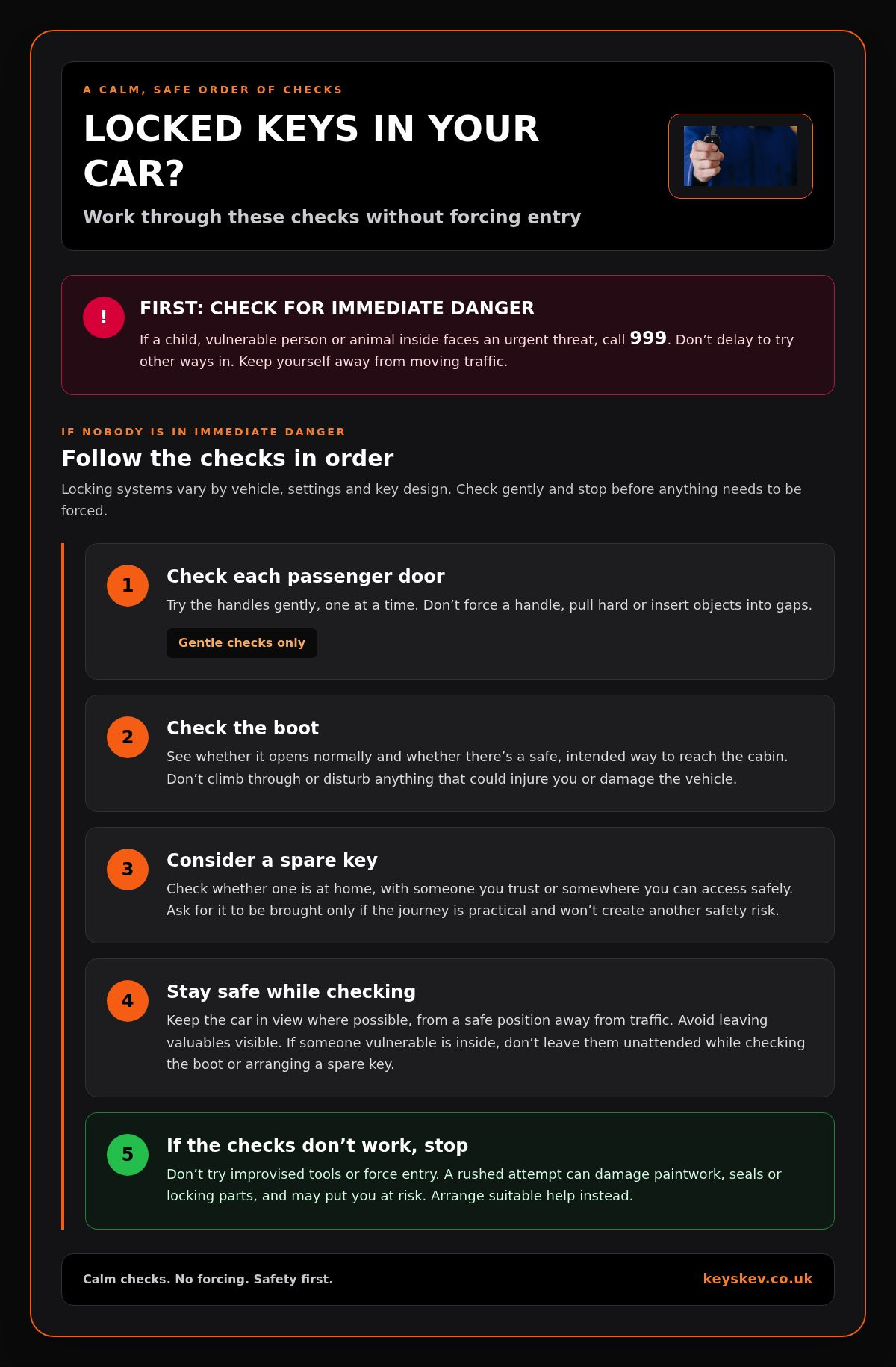
- Check each passenger door. Try the handles gently, one at a time. Don’t force them, insert objects into gaps or pull hard on a locked handle.
- Check the boot. See whether it opens normally and whether there’s a safe, intended way to reach the cabin. Don’t climb through or disturb anything that could injure you or damage the vehicle.
- Think about a spare key. Is one at home, with someone you trust or somewhere you can access safely? Ask them to bring it if the journey is practical and won’t create another safety risk.
- Keep the car in view where possible. Check from a safe position, away from traffic, and avoid leaving valuables visible. If you need to move away, consider the vehicle’s security and the safety of anyone nearby.
If a child, vulnerable person or animal is inside, don’t leave them unattended while checking the boot or arranging a spare key. Stay close enough to monitor them, but keep yourself out of danger. If the circumstances become urgent, call 999 rather than spending time on further checks.
If these options don’t work, stop before trying improvised tools or forcing entry. A rushed attempt can damage the paintwork, seals or locking parts, and may put you at risk. Arrange suitable help instead of making the lockout harder to resolve.
Why keys get locked in a car and what changes?
A vehicle lockout means you can’t get into your car while the key is inside. It can happen with a traditional metal key, a remote fob or a keyless-entry fob. The cause isn’t always a faulty lock. Sometimes it’s a momentary mistake, and the way the car responds depends on its design and settings.
For example, you might put a key on the seat while loading shopping, then shut the door without thinking. A remote fob may be handled separately from the key, while a keyless fob communicates with the vehicle when it’s nearby. These systems work differently, so one car’s locking behaviour isn’t a reliable guide to another’s.
How can a car lock with its key still inside?
A traditional key operates the lock mechanically or is used in the ignition, depending on the vehicle. A remote fob sends a signal when you press a button. With either type, keys can be left on a seat, in the footwell or in the boot while you shut a door. A button press or automatic locking feature may then leave the key inside.
Central locking and automatic locking aren’t identical across makes and models. Some vehicles lock in response to a particular action or setting; others behave differently. Check your vehicle handbook for model-specific details instead of relying on what another car does. General vehicle-security advice, including taking keys with you, is also covered in the NHTSA Vehicle Theft Prevention Guidelines.
Can a keyless-entry fob be locked inside?
It can happen, depending on the vehicle. Proximity systems use signals between the fob and car, and manufacturers vary in how they detect the fob and respond if it’s inside. Some systems have safeguards, but don’t assume yours will always prevent the doors from locking. A weak fob battery or signal issue may also affect detection.
That can make the situation confusing: the car may not respond as expected, or a locking action may happen before you realise the fob is still in the cabin. The handbook is the best place to understand your vehicle’s specific settings and warnings. Avoid repeated button presses if you’re unsure what they’ll do.
Knowing your key type helps explain what may have happened, but it doesn’t change the immediate problem: access is blocked. If the key is inside and the vehicle won’t open, mobile vehicle lockout assistance can provide a practical next step at your car.
Locked keys in your car: which options are safe, and which should you avoid?
With locked keys in car, the safest option is usually the simplest one that doesn’t involve forcing the vehicle. Start with checks that don’t put pressure on the doors or locks. If someone can bring an accessible spare key safely, that may solve the problem without an entry attempt. If a spare isn’t practical, specialist help is a lower-risk next step than improvising with tools.
Compare your options by considering access, practicality and risk:
- Check ordinary access points: try the doors and boot gently. Stop if a handle resists or you’d need to force anything.
- Arrange a spare key: contact someone you trust if they can bring it safely and the wait is manageable.
- Use professional vehicle entry: if self-checks and a spare key aren’t workable, an auto locksmith can choose an approach suited to the vehicle.
Why can improvised car-entry methods cause problems?
A coat hanger, wedge or similar object might look like a harmless quick fix. It can catch or stretch a weather seal, scratch paintwork, bend trim or damage internal locking parts. Pushing an object into a door can also risk contact with wiring or other components hidden from view.
There’s no universal method that suits every car. Locking systems and door construction vary, so force, sharp objects and instructions intended for another model can turn a lockout into a repair. Stop if an approach requires levering the door or inserting tools into a gap.
When is professional vehicle entry the better option?
Choose specialist help when safe checks haven’t worked and getting a spare key isn’t practical. An auto locksmith can assess the vehicle and use entry techniques suited to its locking system. KeysKev uses non-destructive entry techniques for vehicle lockouts, with mobile assistance at the car rather than requiring a journey to a workshop.
Professional locksmithing involves specialist knowledge and tools. ALOA, a US-based professional association, offers information about locksmiths and the profession. It’s useful background, though it isn’t UK-specific guidance. Avoid treating a generic online tutorial as a safe procedure for your own vehicle.
The key distinction is between checking access and trying to defeat the lock. Gentle checks and a safe spare-key plan carry less risk than forcing a door or experimenting with tools. If those options don’t resolve the lockout, mobile vehicle lockout assistance can help you get back into the car using an approach suited to the vehicle.
What to do while waiting for help with locked keys
Once you’ve arranged help, use the waiting time to keep yourself safe and make the situation easier to explain. If you’re beside a busy road, move to a safe, visible place away from passing traffic. Don’t stand in the carriageway or watch the car from an unsafe position. Keep sight of the vehicle where practical, but put your safety first.
What information helps an auto locksmith prepare?
Give the locksmith clear details so they can understand the lockout and find you. Have these ready:
- Vehicle details: make, model and registration. If you’re unsure, check the registration on your vehicle documents or another reliable source.
- Your exact location: use a nearby landmark or clearly describe where the car is parked. In a large car park, name the entrance, level or section if possible.
- What happened: explain whether the key is visible inside the cabin, in the boot or out of sight. Mention whether it’s a traditional key or a fob, if you know.
- Any safety concerns: say if a child, vulnerable person or pet is inside, or if the vehicle is in a hazardous position. Be direct so the urgency is clear.
Accurate information helps avoid confusion, especially if you’re calling from an unfamiliar road or a busy parking area. If your location changes while you wait, let the locksmith know. Keep your phone available in case they need directions or further details.
How can you stay safe during a vehicle lockout?
Choose a waiting spot away from traffic that’s easy to identify. In poor light, stay somewhere visible and well lit if you can. Keep children and vulnerable people supervised, and don’t leave them near moving vehicles while you make arrangements. If a pet is inside, tell the locksmith and keep monitoring the situation from a safe position.
Be mindful of the car without putting yourself at risk. Don’t leave belongings on display, and avoid walking away from an unsecured vehicle if you can safely remain nearby. If you need to move somewhere safer, take essentials with you and ask someone you trust to keep an eye on the vehicle, if practical. Don’t try another forced-entry method while you wait.
KeysKev provides mobile vehicle lockout assistance, so help can come to the car rather than requiring a trip to a workshop. Share your vehicle details, exact location and any urgent concerns clearly. If you’re still unable to get in, contact KeysKev for vehicle lockout help.
How KeysKev helps when your keys are locked in the car
If you’ve checked the sensible options and still can’t get in, there’s no need to keep experimenting with the door. KeysKev Auto Locksmith provides 24/7 mobile vehicle lockout assistance across the UK. A locksmith comes to the vehicle, so you don’t need to arrange a journey to a workshop just to regain access.
What does KeysKev’s mobile lockout help involve?
KeysKev uses non-destructive entry techniques for vehicle lockouts. The aim is to regain access without resorting to force or improvised tools. The approach depends on the vehicle and situation, so share the details you know when you get in touch. Non-destructive techniques offer a practical alternative to trying to prise a door open yourself.
This service focuses on getting you back into the car when the key is locked inside. You don’t need to work out how the lock operates or attempt to manipulate it. Leave the entry to a specialist, and avoid further steps that could put you or the vehicle at risk.
What is the next step if your keys are locked inside?
Contact KeysKev and explain what’s happened. Clear details help the locksmith understand the lockout and the vehicle they’re being asked to attend. You don’t need a technical diagnosis. Describe the situation accurately and mention anything that could affect access or safety.
- Vehicle: provide the make, model and registration.
- Location: give the exact place where the car is parked, including a nearby landmark or car-park level if useful.
- Key position: say whether you can see it in the cabin, whether it’s in the boot, or whether you can’t tell where it is.
- Situation: describe what happened and flag any passenger, pet or other urgent safety concern.
Be specific about your location, particularly if you’re on a long road or in a large car park. If the vehicle is difficult to identify, explain its colour and where it’s positioned. If your circumstances change after you’ve made contact, pass on the updated information. Clear communication helps the locksmith locate you and understand the situation.
Locked keys in car can leave you unsure what to try next. Stop attempting entry and let a mobile auto locksmith handle the access problem using non-destructive techniques. Contact KeysKev for 24/7 mobile vehicle lockout assistance.
Take the next step and get back on the road
A lockout can disrupt your plans, but it doesn’t have to become a bigger problem. If you’ve got locked keys in car, avoid forcing entry or trying another improvised fix. Take a moment to stay safe, then choose a practical way forward.
KeysKev provides 24/7 mobile vehicle lockout assistance across the UK. The locksmith comes to your vehicle and uses non-destructive entry techniques to help restore access. Share the vehicle details, your location and any urgent concerns so the situation is clear from the start.
Contact KeysKev for 24/7 mobile vehicle lockout help. Avoid the risk of unnecessary damage from a rushed attempt and focus on getting safely back on your journey.
Frequently Asked Questions
Can I unlock my car myself if the keys are locked inside?
You can try the vehicle’s intended entry options, such as its normal remote controls or manufacturer-approved app, if you have them. Don’t use a coat hanger, screwdriver or online instructions for a different model. Door construction and locking systems vary, and forcing access can cause damage. If the usual controls aren’t available or don’t work, stop experimenting and arrange help suited to your vehicle.
Will my car lock itself with the keys inside?
It can, but it depends on the vehicle, its settings and how the key is being used. An automatic locking feature, for example, may behave differently from the central locking buttons or remote fob. Don’t assume the car will detect a key left on a seat or in the boot. Check the handbook for the locking behaviour and settings specific to your model.
What should I do if a child or pet is locked in the car?
If a child or pet appears distressed or faces an immediate threat, call 999 straight away and follow the call handler’s instructions. Don’t leave them alone to search for a spare key or try a risky way into the vehicle. If there’s no immediate danger, stay nearby, keep them under observation and seek urgent help. Tell the person assisting you exactly who is inside and how they’re doing.
Can a keyless car lock its fob inside?
Yes, it’s possible on some vehicles. Keyless-entry safeguards differ between manufacturers and models, and a weak fob battery or signal problem may affect detection. A fob tucked in a bag or placed in the boot may not behave as you expect. Check your handbook for the system’s warnings and operating instructions. Don’t rely on proximity detection alone to prevent a lockout.
Does car insurance cover keys locked inside the car?
It depends on your policy. Some policies or add-ons may include lockout or key assistance, whilst others may not cover keys accidentally left inside. Check your policy wording for exclusions, limits and any excess before arranging help, unless someone’s safety is at risk. If you have separate breakdown cover, check its terms too. Don’t assume cover applies just because you have comprehensive car insurance.
Can a locksmith open a car if the keys are visible inside?
Yes, a visible key can help explain the situation, but it doesn’t necessarily make entry straightforward. The locksmith still needs to account for the vehicle’s design and locking system, and may use an approach suited to that model. Tell them where the key can be seen, such as on a front seat or in the boot. Don’t try to reach it through a gap yourself.
Will unlocking my car set off the alarm or immobiliser?
It depends on the vehicle and how it’s unlocked. Some cars may sound an alarm if a door opens without the expected signal, whilst others respond differently. An immobiliser is related to starting the engine, so an alarm sounding doesn’t automatically mean the car can’t start. Use the normal fob or follow the handbook’s instructions if available, and explain any alarm behaviour to the locksmith.


