

What if there’s no original key to copy? You can still get replacement car keys without original, although the method depends on your vehicle and its key system. If you have no spare, it’s natural to wonder how a new key can be cut, programmed and made to work. A replacement can be prepared using vehicle information or by decoding the locks, then cut and electronically programmed where necessary.
This guide explains what affects the process and what to have ready before arranging a replacement. Traditional keys, transponder keys and remote keys can involve different steps, so gather your vehicle details, photo ID and available ownership documents. The VIN can also help identify the vehicle. You’ll usually find it on the dashboard or driver’s door jamb, or in your vehicle paperwork. A mobile auto locksmith can cut and programme a replacement at the vehicle, making this a practical option when you’re without a working key. Here’s what to expect and how to prepare.
Key Takeaways
- Replacement car keys without original may be possible, but the right method depends on your vehicle and its key system.
- Key cutting and electronic programming are separate steps, so a cut key may still need programming before it works with the car.
- Compare mobile auto locksmith, dealership, insurer and breakdown-service routes by whether they can handle an all-keys-lost situation.
- Have your vehicle details, photo ID and available ownership documents ready to help establish authority to make a replacement.
- KeysKev provides mobile replacement key cutting and programming, including support for remote keys and transponders.
Can you get replacement car keys without the original?
Yes, a replacement car key may be possible without the physical original. The method depends on your vehicle’s make, model, year and fitted key system. The key can be prepared using vehicle information or specialist equipment, then cut to suit the locks and, where needed, programmed to work with the car’s security system.
A replacement car key without the original is a new key made when there’s no physical key available to copy. It must match the vehicle’s key system, even if you can’t provide the old key as a pattern.
Cutting and programming are separate jobs. Cutting shapes the blade so it operates the relevant lock. Programming pairs an electronic transponder or remote with the vehicle when the system requires it. A correctly cut key might turn a lock but still fail to start the car if its electronic functions haven’t been set up properly.
There’s a practical difference between losing your only key and needing an extra spare. With an existing working key, a locksmith may be able to use it as a reference or clone its electronic data, depending on the vehicle. If every key is lost, there’s nothing to copy. The replacement process then involves identifying the vehicle’s key system and using suitable equipment to create and programme a new key.
What does ‘without the original’ mean?
It means you can’t hand over a physical key for copying. You may have lost your only key, or the key may be broken, with part of it still available. A damaged key can sometimes provide a useful reference, but it may not be possible to copy it directly. Some all-keys-lost replacements rely instead on vehicle information or specialist equipment to establish the correct key pattern and electronic setup.
Does a replacement need to look exactly like the old key?
No. The replacement needs to work with the vehicle’s locks and key system, not recreate a missing outer shell exactly. A basic mechanical key has a cut blade, while a transponder key also has an electronic chip. Remote and flip keys combine key functions with buttons or a folding blade. The right type depends on the vehicle, so one style of replacement won’t suit every car.
Car key technology has developed from basic cut keys to transponder and smart-key systems. The Car key technology overview gives useful background on those different types. For a replacement, the important detail is what your own vehicle uses. A remote that looks similar to the old one may not have the correct electronics, and a mechanical blade alone won’t replace electronic functions if the car requires them.
- Basic mechanical key: relies on the cut blade to operate the lock.
- Transponder key: includes an electronic component that must work with the vehicle’s security system.
- Remote or smart key: may need the correct remote functions and programming, as well as a suitable emergency blade where fitted.
No original key doesn’t automatically mean there’s no solution. First identify whether the issue is a lost key, a damaged key or a missing spare. That distinction helps determine whether the job is a straightforward copy or a full replacement made for the vehicle.
How are replacement car keys made without a working original?
Making a key without an original starts with identifying the vehicle and its fitted key system. The make, model and year help establish the suitable key type and procedure, although the exact steps vary between vehicles. A mobile auto locksmith can cut and programme a replacement at the vehicle using suitable equipment.
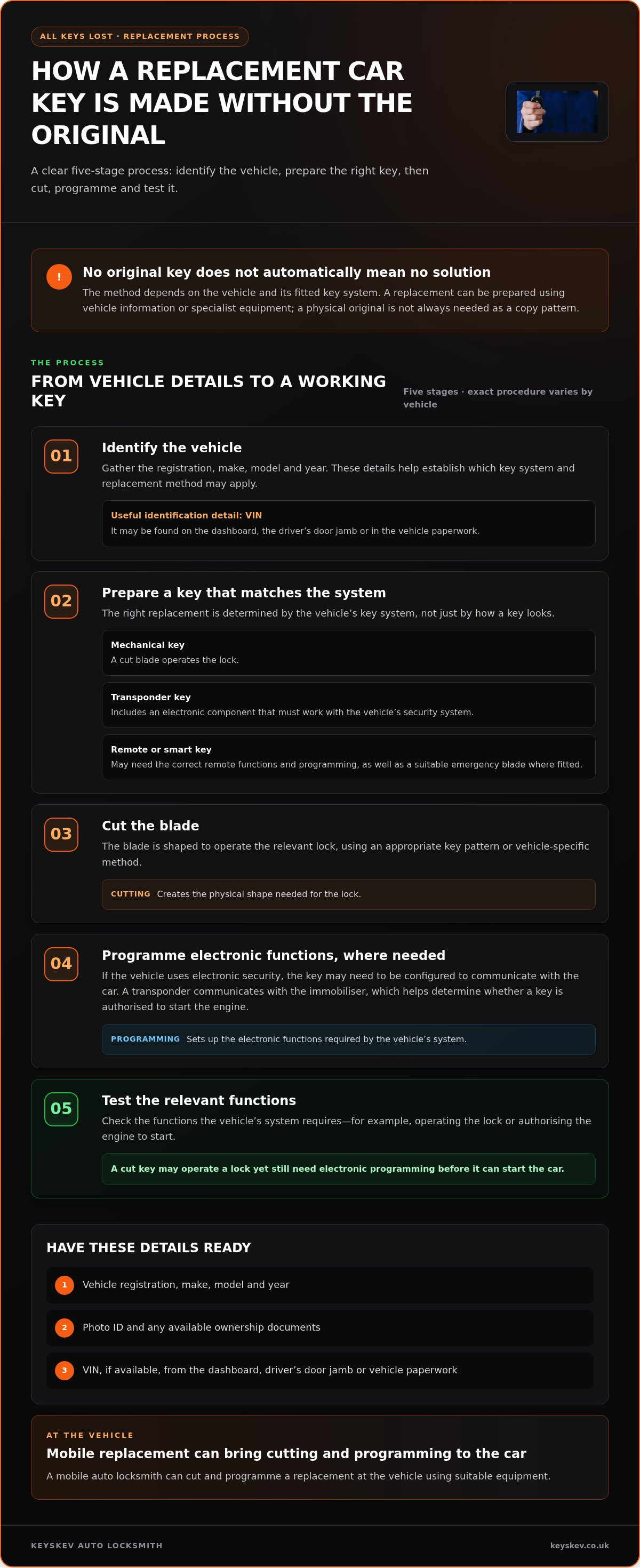
The process commonly follows these stages:
- Identify the vehicle: Gather details such as its registration, make, model and year. These help establish which key system and replacement method may apply.
- Prepare a suitable key: Select a key that matches the vehicle’s system. Depending on the car, this may include a physical blade, transponder or remote functions.
- Cut the key: Shape the blade to operate the relevant lock, using an appropriate key pattern or vehicle-specific method.
- Programme electronic functions: Where the vehicle uses electronic security, configure the key so the relevant functions communicate with the car.
- Test the result: Check the key’s relevant functions, such as operating the lock or authorising the engine to start, according to the vehicle’s system.
Replacement car keys without original aren’t simply a matter of cutting a similar-looking blade. Vehicle identification guides the work, and testing helps establish whether the key and its relevant functions operate as intended.
How does a locksmith identify the correct key?
Accurate vehicle details help distinguish between key types and procedures. Have the registration, make, model and year ready when arranging the work. These details support identification, but the installed key system matters too. The replacement method is determined for the vehicle, rather than chosen by appearance alone.
Why might the replacement need programming?
A transponder is a small electronic component in some keys. It communicates with the vehicle’s immobiliser, which helps determine whether the key is authorised to start the engine. Programming sets up the key for that communication. Remote locking and engine-start authorisation may involve separate components or functions, and vehicle systems vary. A remote that operates the locks does not necessarily mean the key can start the car.
A replacement may need both a blade cut to operate the lock and electronic programming to work with the vehicle’s security system. The combination depends on the key type fitted to the car.
If you’ve lost every key, having the vehicle details to hand can help get the process started. KeysKev provides mobile car key cutting and programming, including replacement keys when the original is lost.
Which replacement route suits a car with no original key?
The right route depends on the vehicle’s key system, whether all keys are lost and what help you need at the vehicle. A mobile auto locksmith can come to the car to cut and programme a replacement. A dealership, insurer or breakdown provider may also be relevant, but their processes and cover differ. No route suits every case.
| Route | Mobile service? | Programming and all-keys-lost cases |
|---|---|---|
| Mobile auto locksmith | Yes, the locksmith attends the vehicle. | Can cut and programme replacement keys. The vehicle and key system determine the equipment and procedure. |
| Dealership | Not necessarily. The process may require the vehicle to be brought in. | Can advise on its vehicle-specific replacement process. Steps vary by vehicle and dealership. |
| Insurer | Depends on the policy and the service it provides. | Key replacement may depend on your key-cover terms. Check what’s included and how a claim is handled. |
| Breakdown service | Attendance depends on the service and your cover. | Breakdown assistance and making a replacement key aren’t necessarily the same service. Check whether key replacement is included. |
Use the table as a starting point, not a ranking. A policy that includes key cover may affect your next step, while a vehicle with a particular electronic system may need a specific replacement procedure. Consider whether you need help at the vehicle, a working programmed key, or both. For a broader look at the available routes, compare the lost car key replacement options that fit your circumstances.
When can a mobile auto locksmith help?
A mobile auto locksmith can cut and programme a replacement key at the vehicle, including when the original has been lost. The vehicle’s make, model, year and installed key system determine the equipment and procedure needed. KeysKev provides mobile key cutting and programming, including replacement keys, remotes and transponders. The vehicle’s system guides how the job is carried out.
When might a dealership, insurer or breakdown provider be relevant?
A dealership follows a vehicle-specific process, which may differ from a mobile service. If you have key cover, read your policy before assuming it pays for a replacement or sets out a particular route. Breakdown assistance may help with a breakdown or access issue, but that doesn’t automatically mean a new key will be cut and programmed. Check what your cover includes.
For replacement car keys without original, focus on the practical question: who can handle the key-making and programming your vehicle needs, and where will that work take place? Mobile help can avoid arranging to transport the car, while dealership or policy routes may suit other circumstances. Knowing the difference helps you choose a next step without assuming every service covers the same job.
What should you prepare before arranging a replacement car key?
Having a few details ready can help identify the vehicle and the key problem. Gather what you can, even if you don’t have every document to hand. A locksmith may need to establish that you’re authorised to arrange work on the vehicle before making a replacement. This helps protect the car and keeps the process clear.
Which vehicle details and documents are useful?
Have the vehicle registration, make, model and year ready. These details help identify the car and its key system, but no single one guarantees a match. Also have photo identification and relevant vehicle documents available, such as the V5C log book or insurance paperwork. Gather the documents you have rather than assuming one item is always required.
- Vehicle details: registration, make, model and year.
- Identification: photo ID for the person arranging the key.
- Vehicle documents: available paperwork, such as the V5C or insurance documents.
A locksmith may ask to see information that helps establish your connection to the car and authority to request a key. Keep the vehicle accessible for the work, and have the relevant details or documents ready. If you’re unsure where to find the registration or vehicle information, check your vehicle paperwork or registration plate.
What details help explain the key problem?
Describe what happened as clearly as you can. Say whether every key is lost, one is damaged or a spare remains. If you know the missing key was a remote, flip key or transponder key, mention that too. A broken key, spare or separate remote can provide useful context. You don’t need to diagnose a technical fault; explain what still works and what doesn’t.
If you suspect the key was stolen, tell the appropriate authorities and your insurer. Mention suspected theft when arranging a replacement too, as it helps make the situation clear. For broader first steps, including what to do after losing car keys, consider the circumstances around the loss as well as the replacement itself.
Before arranging replacement car keys without original, make a quick note of the vehicle details, documents you can access and exactly what happened. This helps describe the job accurately, whether you’ve lost every key or still have a damaged one. If the vehicle needs mobile key cutting and programming, arrange replacement car key help with KeysKev Auto Locksmith.
How KeysKev helps when you need car keys without the original
No original key to copy? KeysKev provides mobile vehicle key cutting and programming, including replacement keys when the original is lost. The work is carried out at the vehicle, with the make, model and fitted key system guiding the method. This gives drivers a practical way to arrange key work without relying on a physical original as a template.
What happens when you arrange mobile key assistance?
Describe the vehicle and explain whether all keys are missing, one is damaged or you have a spare. Share the registration, make, model and year if available. These details help outline the job before work begins at the vehicle. KeysKev’s mobile service covers key cutting and programming, with the work shaped around the vehicle’s key system rather than a one-size-fits-all process.
Clear information helps distinguish an all-keys-lost job from a damaged-key or spare-key situation. If the missing key had remote buttons or a flip-out blade, mention that too. Explain whether you need a replacement key, a remote or a transponder. If you’re unsure of the technical terms, describe what the key looked like and what it used to do.
Could the vehicle need more than a replacement key?
Sometimes the work involves programming as well as preparing the key. Certain cases may call for vehicle module programming, which is separate from cutting a key. Key cloning is another option for suitable circumstances, but it isn’t the same as making a replacement after every key has been lost. The right approach depends on the vehicle and the situation.
KeysKev works with replacement keys, remote and flip keys, transponders, key cloning and vehicle module programming. These services address different key-related needs, but the vehicle’s make, model and installed system determine the method. Don’t assume every situation follows the same steps, particularly when no working key is available.
Before arranging help, keep the key details together:
- Vehicle: registration, make, model and year.
- Key situation: whether every key is missing, one is damaged or a spare remains.
- Key type: remote, flip key or transponder, if known.
- Other relevant details: any key or remote still available, and whether theft is suspected.
These details help explain what’s needed. The vehicle’s key system determines the method. If you need a mobile solution for replacement car keys without original, arrange mobile car key cutting and programming with KeysKev.
Take the next step towards getting back on the road
Losing every key can leave you unsure where to begin. You don’t need to diagnose the vehicle’s key system yourself. A clear description of what’s happened gives the replacement process a practical starting point, and the method can then be matched to the car.
If you’re looking for replacement car keys without original, KeysKev Auto Locksmith provides mobile auto locksmith assistance, including replacement key cutting and programming for remote, flip and transponder keys. Share your vehicle details and explain whether a key is missing, damaged or suspected stolen. This helps describe the job clearly from the outset.
Ready to discuss your vehicle and the key you need? Arrange mobile replacement car key assistance with KeysKev. A missing key is frustrating, but it doesn’t have to leave you without a clear next step.
Frequently Asked Questions
Can a locksmith make a car key from the vehicle identification number?
A VIN can help identify your vehicle, but it doesn’t guarantee that a key can be made from that number alone. The method depends on the car and its key system, and further details or checks may be needed. If you’re arranging replacement car keys without original, give accurate vehicle information and be ready to show that you’re authorised to request the work. The VIN is usually shown on the vehicle or its paperwork.
Do I need proof of ownership to get a replacement car key?
Be prepared to show identification and documents linking you to the vehicle. The checks may vary, so don’t assume one document will be enough in every case. Have relevant paperwork available, such as vehicle documents or insurance details, and explain any unusual circumstances, for example if the car is registered to someone else. These steps help establish that you’re authorised to request a key for that vehicle.
Can a replacement car key be made if the car battery is flat?
Possibly, but a flat battery can affect access to the vehicle or electronic checks involved in the work. The impact depends on the car and its key system. Tell the locksmith about the battery when arranging assistance, and mention whether the doors are locked or you can reach the vehicle’s battery. This gives useful context for planning the job.
Does car insurance cover replacement keys when the original is lost?
It depends on your policy and how the key went missing. Some policies include key cover, while others may exclude it or set conditions for making a claim. Read the policy wording and speak to your insurer before assuming a replacement is covered. If you think the key was stolen, follow your insurer’s reporting instructions and tell the locksmith, as this may affect what you need to do next.
Can I drive my car without its key fob?
It depends on the vehicle, whether it’s already running and how its keyless system works. Some cars may continue running for a time after the fob is no longer detected, but don’t rely on that or switch the engine off expecting to restart. Check the vehicle handbook for model-specific guidance. If you can’t use the car as intended, arrange a replacement rather than testing the system on the road.
Can a lost car key still unlock the car after a replacement is made?
It may, depending on the vehicle’s security system and the options available for that model. A replacement doesn’t necessarily disable every missing key. If the key may have been stolen, raise the concern when arranging the work and ask what key settings can be addressed for your vehicle. Don’t assume the missing key has stopped working until you understand how your car handles its existing keys.
Is it worth getting a spare key after replacing the only one?
A spare can reduce the disruption caused by losing or damaging your everyday key again. Whether it makes sense depends on your vehicle and circumstances, but it’s worth considering once your replacement is working. KeysKev also provides spare key cutting and programming. You can discuss a spare as part of planning ahead, rather than waiting until you’re left without a usable key again.


